Why Belarusians Speak Russian — and how Belarusian was marginalized under Lukashenka

Why do Belarusians speak Russian? / @rubanau_collage
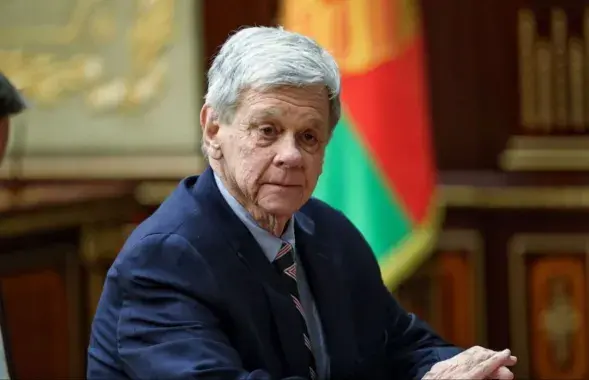
“One must not forget one’s language. If we do not know the Belarusian language, we are not Belarusians.” One might think these words belonged to Yanka Kupala or Yakub Kolas, but, ironically enough, their author was Alexander Lukashenka.
This is how the politician spoke in 2022 during a meeting at the Academy of Sciences about strengthening the national identity of Belarusians. But the irony lies in the fact that over the past 30 years the authorities have done everything possible to remove the Belarusian language from public life.
Euroradio recalls how the state systematically fought against manifestations of Belarusian identity in the country.
A turning-point referendum
In 1995, less than a year after coming to power, Alexander Lukashenka initiated the first national referendum, which would determine the country’s future for many years ahead. Citizens were asked to answer four questions: whether Russian should be granted state language status alongside Belarusian, whether the state symbols should be changed, whether economic integration with Russia should be deepened, and whether the president should have the right to dissolve parliament.
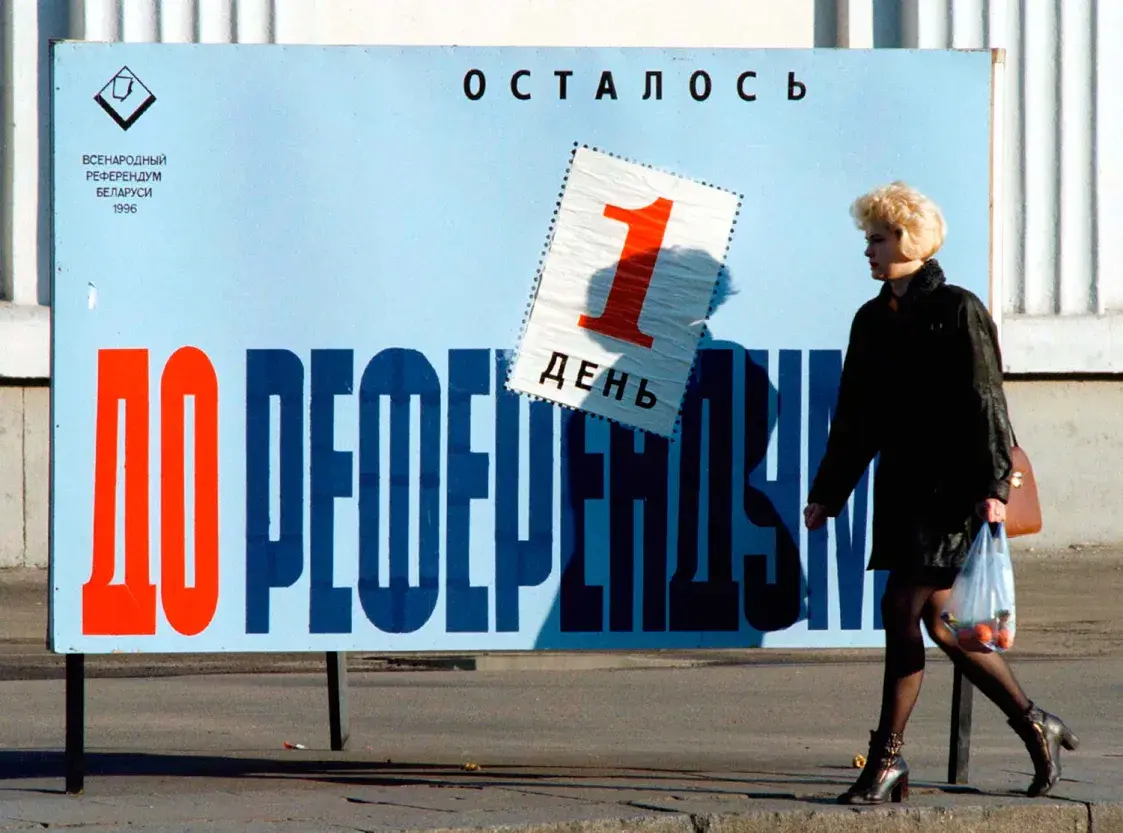
The results were favorable for the authorities: 83.3% supported granting Russian state language status, 75.1% approved replacing the state symbols, 83.3% backed closer economic integration with Russia, and 77.7% agreed to expand presidential powers.
This referendum became a turning point in Belarusian history. Although Belarusian formally retained its status as a state language, the sphere of its use began to shrink rapidly.
Officials and military personnel who in the early 1990s had tried to speak Belarusian quickly abandoned the practice and switched entirely to Russian. Lukashenka himself, although speaking with a characteristic Belarusian accent, also primarily used Russian.
Decline of Belarusian-language schools and classes
Over the past 30 years, Belarus has seen a gradual decline in the number of schools and classes teaching in Belarusian.
In the 1994–1995 school year, 58% of first graders in Minsk studied in Belarusian. However, after Alexander Lukashenka came to power in 1994, this figure began to fall sharply. By 1999, only 5.3% of Minsk first graders were receiving education in Belarusian.

The trend continued in the following decades. In the 2016–2017 school year, around 128,000 students across the country studied in Belarusian, accounting for approximately 13.3% of all schoolchildren.
Most such schools were located in rural areas, where population decline led to the closure of around 100 small schools annually, many of them Belarusian-language schools.
In the 2020s, the russification of education has continued to intensify. This became especially noticeable after the events of 2020 and the growing influence of Russia over Belarus.
Education Minister Andrei Ivanets stated in 2023 that around 10% of schoolchildren study in Belarusian, despite the fact that 40% of schools are formally considered Belarusian-language schools.

However, he acknowledged that most of these schools are located in rural areas where student numbers are steadily declining.
In 2020, the Ministry of Education claimed that more than 45% of schools in Belarus were Belarusian-language schools. But within three years this share had officially fallen to 40%, indicating the gradual disappearance of national education even according to official data.
Today, Belarusian-language schools survive mainly in villages, but many are gradually closing due to low student numbers. In cities, the situation is even worse: some have no Belarusian-language classes at all.
As of the 2023 and 2024 school years, fully Belarusian-language schools remained only in Minsk. In district centers, Belarusian-language education survived in just two schools: Gymnasium No. 2 in Barysaw and School No. 4 in Ivanava in the Brest region.
Some schools that were previously Belarusian-language have switched to Russian instruction. For example, School No. 3 in Hlybokaye became bilingual in 2006, while Gymnasium No. 1 in Navahrudak — where renowned Belarusian scientist Boris Kit studied and taught — completely switched to Russian.
Campaign against the Belarusian Latin alphabet
The Lukashenka regime continues its policy of russification, and another step in this direction was the elimination of the Belarusian Latin alphabet (Łacinka) from the official transliteration of geographical names. The decision followed growing criticism from pro-government activists, who described Łacinka as “foreign” and “Polonizing.”
Officially, the issue was discussed during a meeting of the Republican Council on Historical Policy under the Presidential Administration on December 8, 2022.
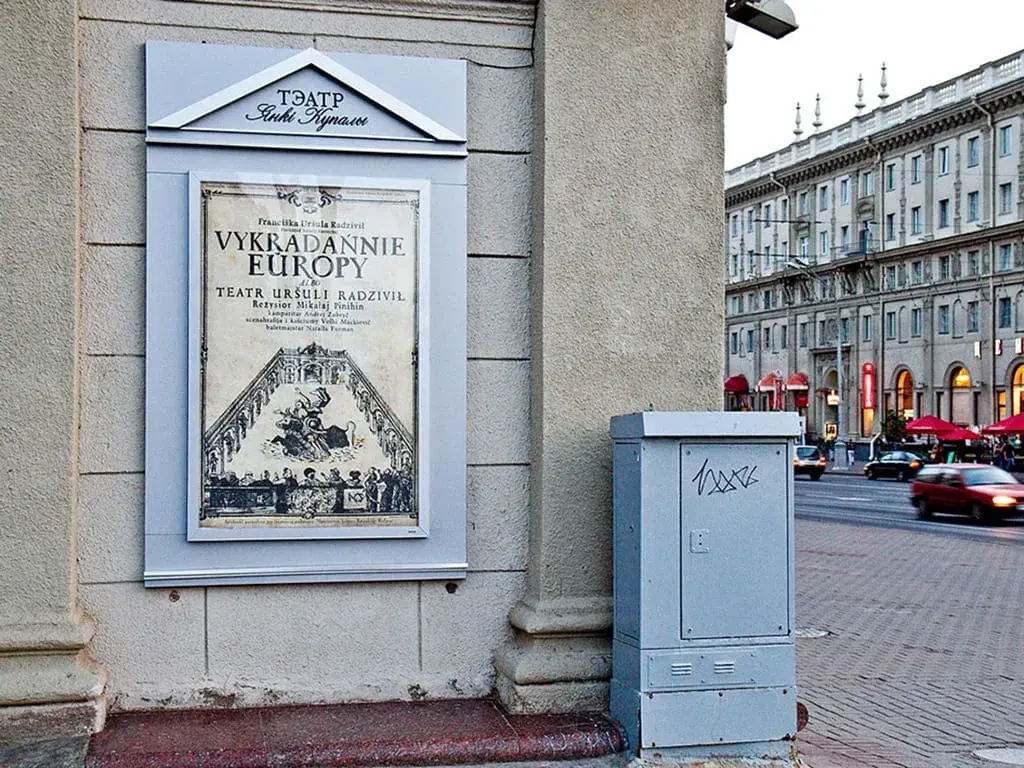
Afterward, Lukashenka Administration head Ihar Sergeyenka submitted a memorandum to Lukashenka claiming that the use of the Latin alphabet “complicates the perception of information” and “serves as an element of Western cultural influence.”
In response, Lukashenka signed an order instructing state bodies to stop using the Belarusian Latin alphabet.
As a result, the State Committee on Property amended the official transliteration guidelines for geographical names, effectively eliminating Belarusian Łacinka from public use.
The new rules provide for transliteration not only from Belarusian but also from Russian, further strengthening Russian linguistic dominance.
The decision sparked mixed reactions. Belarusian activists and linguists argue that eliminating Łacinka is not only a violation of historical justice, but also a rejection of part of the nation’s identity.
At the same time, the authorities continue to insist that transliteration of geographical names into Latin script is unnecessary inside the country and should only be used for international maps.
The disappearance of Belarusian from everyday use
The Belarusian language is losing its communicative function in society. According to research by the BISS, Belarus ranks among the lowest of Eastern Partnership countries in the use of the national language in media and daily life.
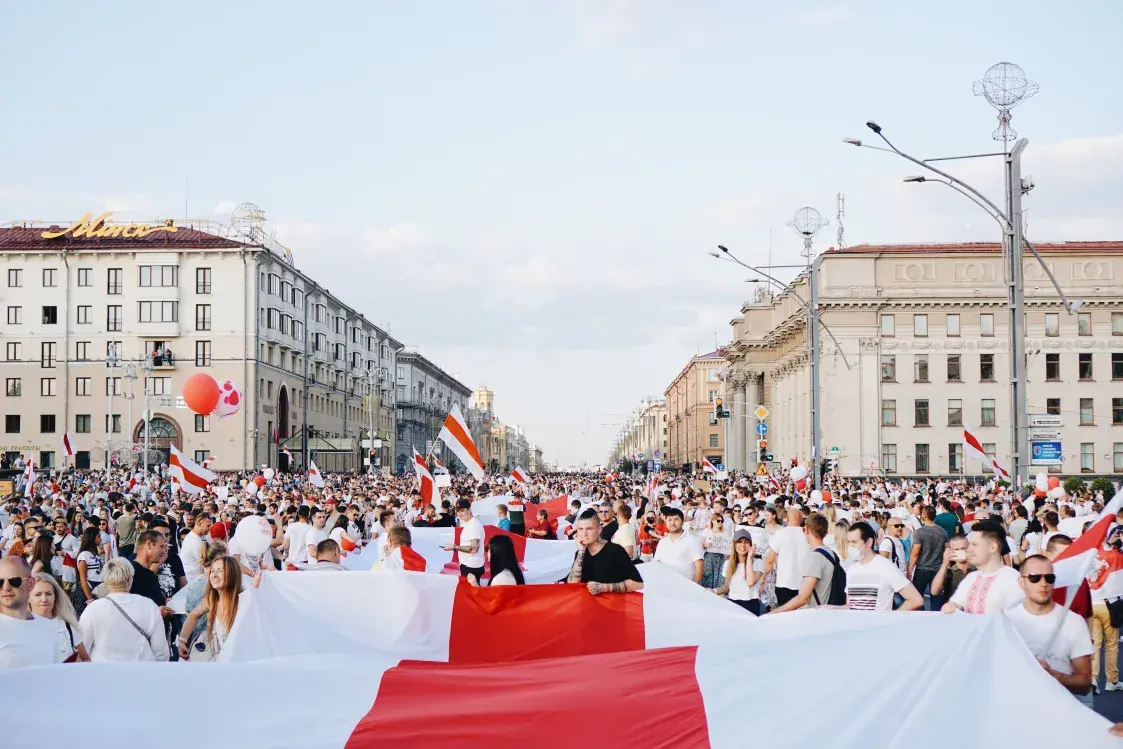
Among 33 European countries, Belarus ranks last in recognizing the national language as a factor of identity.
After 2020, repression against Belarusian culture and language intensified. Belarusian-language initiatives are now viewed by the authorities as potentially oppositional. The worsening situation has also been influenced by Russia’s war in Ukraine, which has deepened official Minsk’s dependence on Moscow and further marginalized the Belarusian language.
As a result, the state has almost completely abandoned support for the Belarusian language. Its preservation now largely depends on the diaspora, civic initiatives, and Belarusians themselves, wherever they may be.
/ automated translation